Earth-rooted. Scorpio-hearted. Open to every path.

One Tree Rising

If I rise, we all rise. I’m leaving nobody behind.

Come as you are. This space is for people in recovery, people finding their way, loved ones and others affected by addiction—and anyone who wants to grow into the fullest version of themselves. Begin with practical nourishment, gentle movement, soulful inner care, and one doable choice at a time.

Make a plan for today
Three adults walking together on a sunny nature trail; one woman carries a rolled yoga mat over her shoulder, and the man has a black phoenix tattoo on his left forearm
“Healing is not a repair job. It is a relationship with your whole self.”

We believe the mind, body, and spirit are connected. Whether you are healing from addiction, supporting someone you love, living with its impact, or simply becoming more fully yourself, whole-person care can honor that connection. When addiction is part of the story, this care belongs alongside evidence-based treatment, medication, counseling, peer support, and qualified health professionals.

Nutrition is our starting point—through food, sleep, meditation, sunlight, movement, and connection—not a cure, a test of willpower, or a replacement for care.
Spiritual here means wonder, meaning, intuition, and connection—not a required belief. Prayer, stargazing, quiet woods, astrology, and simple kitchen rituals can all have a place at the table.

A foundation you can build on.

Wherever you are in your own story—and whether addiction touches your life directly or through someone you love—you belong here. Begin with practices that support steadiness, self-trust, and growth, not perfection.

01

Nourish the body

Regular meals, hydration, and accessible whole foods can become reliable anchors in the day.

02

Settle the mind

Simple pauses, supportive connection, and compassionate routines can make room for clearer choices.

03

Tend the spirit

Meaning can come through faith, nature, creativity, service, or community. Your path is yours to name.

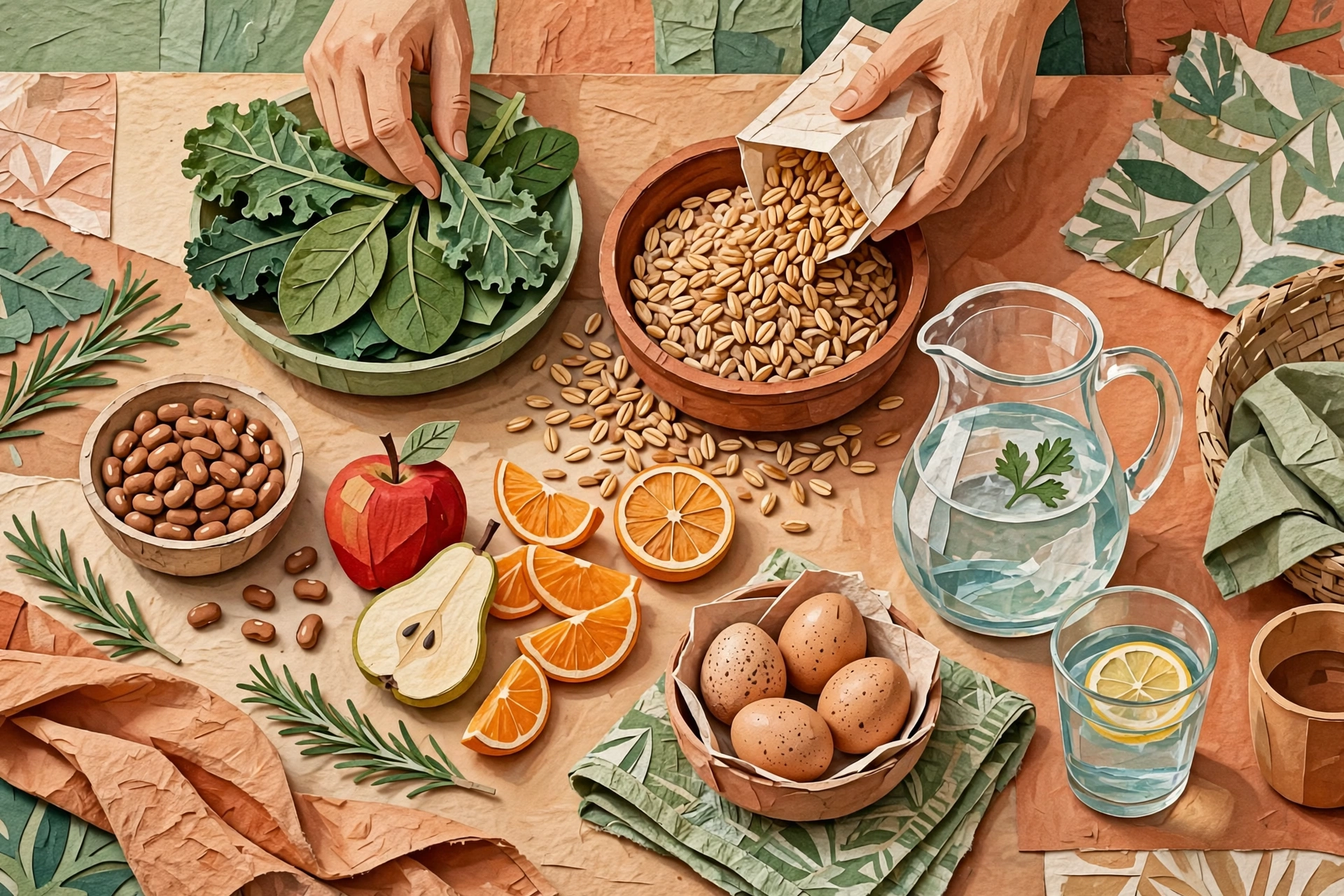
Hands preparing greens, grains, beans, fruit, eggs, and water on a kitchen counter

Nutrition is care made visible.

There is no diet label at the door. Whether you eat meat, avoid it, or are curious about more raw and plant-rich foods, the invitation is the same: notice what helps you feel steady, energized, and at home in your body. Listen to your own signals—not commercials, trends, or food rules. If eating is difficult, start smaller and ask a clinician or registered dietitian for individualized support.

Your pocket plan.

This lightweight web app works on phone and desktop to create a gentle, one-session plan. Nothing is stored when you leave.

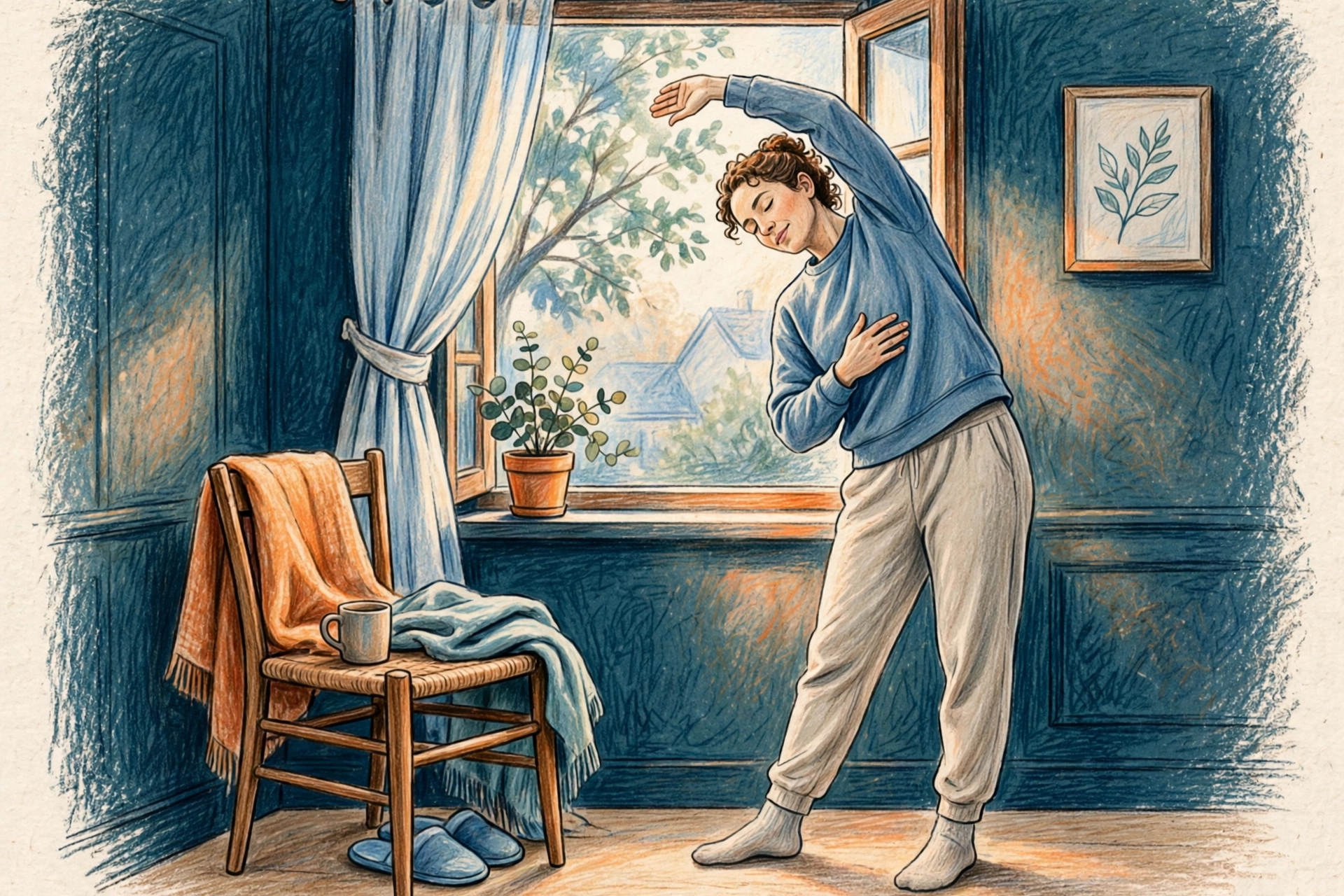
A person doing a gentle side stretch beside a chair and open window

What kind of support would help?

Start with nourishment

  • Drink a glass of water.
  • Eat something with protein and carbohydrates.

If movement or nutrition is medically complicated for you, check with a qualified practitioner before changing your routine.

Why this space exists.

I am three years sober by choice after using meth intravenously. Lately, it has been on my heart to share what helped me—in the hope that it might help someone else.

There is a saying in AA: “If you don’t share it, you will lose it.” I am beginning not only to believe that, but to feel it. I have reached a place where I am ready to share.

My turning point was quiet. I was visiting my girls at my mom’s house after I had lost custody. We were sitting on the porch, catching up and hanging out—nothing deep, nothing planned. I looked at them and fell in love with them all over again. As I saw the best of myself in them, I fell in love with myself, too.

In that moment, I knew I deserved to heal. They deserved the best mom in the world—and they had me—so I had a lot of work to do. That porch did not erase the work ahead, but it gave me a reason to begin it.

I also had to face the time I had missed with my sons, now 26 and 24. I did not heal in time to give them the version of me I wish they had known. But I realized that did not mean I had missed my chance to heal. I still deserved healing—not to rewrite the past, but to live differently now.

For a long time, guilt was part of what kept me from stopping. Getting high took away the guilt and sadness—really, every emotion—and replaced it with an insane happiness. But it only lasted until the high wore off. Then everything I was trying not to feel was still there.

What my mom calls “the nutrition thing” began as a replacement for drugs—another addiction. Healthier, yes, but still a way to fill the void. Over time, it became something deeper: a way to notice my body, care for my whole self, and build a life beyond simply stopping a substance.

I do not put a label on the way I eat. I occasionally eat meat, while personally exploring a more raw, plant-rich way of nourishing myself. This is not about recruiting anyone into a food identity. It is an invitation to get curious, try another way of living, and listen to your own inner signals—not the commercials—when deciding what to eat, wear, listen to, or take part in.

I found that after I gave my body what I call a reset, I could begin to hear it again. For two weeks, I ate plant-based, mostly single-ingredient and minimally processed foods, with no added sugar—not even agave, maple syrup, or honey. I ate raw foods as much as I could: lots of fruit and salads, plus overnight oats, brown rice, and roasted vegetables. I used olive oil, left other oils and bread out for that stretch, and tried to keep things as simple as possible.

After those two weeks, food tasted so much better to me. Lemons, limes, and grapefruit tasted almost as sweet as oranges. Berries were incredible. That was my own experience, not a detox claim or a rule for anyone else. A restrictive plan is not safe or useful for everyone, especially for people with medical conditions, a history of disordered eating, or medication-related nutrition needs.

I follow the MIND eating pattern as best I can, with 85 percent—not perfection—as my goal. MIND blends the Mediterranean and DASH (Dietary Approaches to Stop Hypertension) diets. DASH was developed to help lower high blood pressure, and research shows it can also improve cholesterol. In a 2015 observational study, the people who followed MIND most closely had a 53 percent lower risk of Alzheimer’s disease, while moderate followers had about a 35 percent lower risk. That is an association, not a promise, but it reminds me that consistent choices still matter. Learn about DASH from the National Heart, Lung, and Blood Institute.

I write here as 85/15. It was my name in the streets; now it is the philosophy I am choosing for my life. I aim to eat well, move, and show up for myself about 85 percent of the time—and meet the other 15 percent without judgment. The name helps me remember where I came from without demanding perfection from where I am going.

This is a spiritual but not religious space—comfortable with astrology, garden wisdom, homemade tonics, prayer, and the mystery of a clear night sky. You never have to set aside your faith, borrow someone else’s beliefs, or call your inner life by any particular name.

Healing does not have to happen alone. Recovery can involve medical treatment, counseling, medication, peer support, mutual-aid groups, family, and community. Whole-person care belongs beside those supports—not in place of them.

— 85/15Writing from where I am, while remembering where I was.

Start where you are.

Short, practical reading for recovery, supporting someone you love, and becoming more fully yourself.

Can I recover without rehab or AA?

Short answer: yes. People do it every day.

Rehab and AA save lives — I won't pretend otherwise. But they're not the only doors into recovery. What actually keeps people sober isn't a specific program. It's honesty, support, and a plan for the hard moments.

Here's the thing though — while they're not required, they sure help get your foot in the door. Rehab gives you around 30 days of clean time, surrounded by like-minded people, and teaches you things you might never learn on your own. Because when you're in it, you're too caught up getting high, chasing the high, hiding the fact that you're high, or figuring out how to finance the high to think about anything else.

The last time I got clean, I finally did one of the first things I learned in AA: change your people, places, and things. I moved three hours away. I cut contact with everybody I did drugs with. I recognized my triggers and avoided them. That one lesson changed everything.

Here's what I'd tell a friend asking me this:

You need people. Not necessarily a sponsor or a group — though those help — but at least one human who knows the truth and checks on you. Isolation is where addiction thrives.

You need a plan for cravings. They will come. Decide now what you'll do when they do — who you'll call, where you'll go, what you'll do with your hands.

You need to get honest about why you used. The substance was never really the problem. It was the solution to a problem — pain, trauma, boredom, shame. Healing means facing that part gently.

There are other paths too: SMART Recovery, peer support groups, therapy, spiritual practice, holistic tools. Some people build their own mix. That's okay. Recovery isn't one-size-fits-all.

The only thing that doesn't work is doing nothing and hoping. Pick a path — any honest path — and walk it.

How do I deal with cravings that hit out of nowhere?

First: cravings are normal. Having one doesn't mean you're failing. It means you're healing and your brain is still rewiring.

Second: a craving is a wave. It rises, it peaks, and it passes — usually in 15 to 20 minutes. You don't have to fight the ocean. You just have to ride it out.

Have a plan before the craving ever hits. This one might matter most. Write down exactly what you'll do when a craving comes — who you'll call, where you'll go — and do not deviate from it. I wrote my plan down and I did not go off script, no matter what.

Here's why: in early recovery, it's dangerously easy to drift. You start out trying to call your sponsor, and somehow you end up calling an old drug buddy instead. They listen just like your sponsor does. You know them a whole lot better than your sponsor. And before you know it, you're two towns over, three days later, in some stranger's kitchen at 4 in the morning with headlamps on, taking apart something stolen. A plan gives you a script to follow when your brain can't be trusted to write one.

Here's what actually helps me in the moment:

Pause and breathe. Put your hand on your heart, breathe in slow, breathe out slower. This is my grounding move. It tells your body: you're safe.

Move. Walk around the block. Stretch. Shake your hands out. Cravings live in the body — moving the body moves the craving through.

Change the scene. If you're somewhere that triggers you, leave. Go outside. Go to a different room. Environment matters more than willpower.

Call someone. Say it out loud: "I'm having a craving." Shame grows in silence. Saying it shrinks it.

Eat or drink something. Sometimes a craving is really hunger, thirst, or exhaustion wearing a disguise. A glass of water and a piece of fruit have saved me more than once.

Don't white-knuckle it alone. Use the wave. It always passes.

Can meditation and breathwork really help with cravings?

Honest answer: yes. And you don't need to be a "meditation person." Research backs this up too — a 2026 review of 20 studies (Roxburgh et al., published in Addiction) found breathing exercises produce small but real reductions in cravings, across nicotine, alcohol, opioids, and stimulants. Small, but real. It's a tool, not a cure.

Here's the plain version of why it works. A craving is your nervous system screaming for relief. Breathwork helps calm your nervous system down — deliberately slowing your breath dials back your body's stress response. That creates a small gap between the urge and the action. And in that gap, you get to choose.

You don't need incense, a cushion, or 30 minutes. Try this:

Hand on heart. Place your hand on your chest. Breathe in for 4 counts, out for 6. Do it five times. That's it. This is the technique that carried me through my hardest nights.

Box breathing. In for 4, hold for 4, out for 4, hold for 4. Repeat. It gives your mind something to do besides obsess. One note: if focusing on the counts makes you more anxious, skip them — just slow your breathing down and let the out-breath run a little longer than the in-breath.

One minute counts. You don't need a perfect practice. One conscious minute is 100% better than zero. Remember 85/15 — you don't have to be perfect at this either.

The craving wants you on autopilot. Breathwork wakes you up just enough to remember you're the one driving.

And here's something nobody told me: meditation makes your mind stronger. So does clean time. Every day you get through, every craving you ride out — it all builds. I won't tell you it gets easier. But I promise you this: it gets better.

Why do I feel so flat in early sobriety — and when does it get better?

If nothing feels good anymore — food is bland, music does nothing, you can't remember the last time you laughed for real — you're not broken. This is one of the most normal parts of early recovery, and almost nobody warns you about it.

Here's the plain version of what's happening. Drugs and alcohol flood your brain with feel-good chemicals — way more than life ever would on its own. After a while, your brain gets used to the flood and turns down its own sensitivity, so normal everyday things stop feeling like much. Then you get sober, the flood stops, but your brain is still turned down low. Everything feels flat because your reward system needs time to wake back up.

The good news: your brain knows how to rebuild. It just needs time. For most people, the flatness starts lifting in a few weeks and keeps getting better over months. It doesn't come back all at once — it comes back in flickers. A song hits you. Food tastes like something again. You catch yourself smiling and it surprises you.

Here's what helped me get through the gray:

Move your body. I know, you don't feel like it. Do it anyway. A walk around the block helps wake your reward system back up. It's the fastest honest way to feel something. And here's a secret: I know something that feels almost as good — a weightlifter's high, a runner's high, a bicycle rider's high. Even a yoga high, though that one's more subtle. Your body can make its own high. Not everyone feels it every time — it tends to come with sustained movement like running, biking, or a strong yoga flow — but many people do. And what those highs lack in intensity, they can make up for in healing: research suggests regular exercise may help your brain relearn how to feel good naturally over time, as one part of recovery, not a cure on its own.

Get sunlight. Morning sun on your face. It sounds too simple. Do it anyway.

Don't chase the feeling. The worst thing you can do is sit around waiting to feel good. Go live your day, and let the good feelings sneak up on you.

Tell someone. "I feel numb and it's scaring me" is a powerful sentence. The flatness loves isolation. Don't give it what it wants.

Be patient with the timeline. This isn't permanent. Your brain is healing at the exact speed it needs to. Every clean day is a day your brain is rebuilding.

One day you'll be eating berries and they'll taste almost too sweet, and you'll remember when nothing tasted like anything. That day is coming. Keep going.

How do I rebuild trust with my family after addiction?

Everyone will tell you the same thing: just stay sober and be patient. More patient than they were with you when you were using. And they're right — but let me tell you what that actually feels like.

I say "I've heard" because I'm still living it. Three years sober, and I still catch my parents looking at me with doubt sometimes. I'm in an exceptionally good mood — doubt. I'm up before them — doubt. I've been asked "did you sleep last night?" I've heard "hmmm, you sure are in a good mood" in that tone. You know the tone.

It hurts. Every single time. And here's what I have to remind myself: no matter who thinks I'm still using, that is not an excuse to start back. The drugs will tell you different. The drugs will whisper "they don't believe you anyway — might as well." That is the addiction talking, not the truth. Don't listen.

So how do you actually rebuild trust? Slowly. There's no shortcut, so don't look for one.

Keep showing up. Trust isn't rebuilt with one big gesture. It's rebuilt with a hundred small ones — being where you said you'd be, doing what you said you'd do, over and over until it stops being a surprise.

Don't demand it. You don't get to set the timeline for someone else's healing. They get to doubt for as long as they need to. Your job is to stay sober anyway.

Let them have their doubt without punishing them for it. Getting angry about their suspicion just confirms their fear. Stay soft. They're not trying to hurt you — they're scared.

Tell the truth, even when it's ugly. Every honest conversation is a brick. Every lie — even a small one — knocks the wall down.

And here's a hard one nobody talks about: some loved ones get uncomfortable when you get sober. Think about it — as long as you're the one using, you're the problem everyone worries about. Their problems, their faults, those don't seem so bad next to yours. When you get clean, that spotlight moves, and some people don't like where it lands. That's their work to do, not yours. Don't you dare pick the drugs back up just to make someone else comfortable.

Remember who you're doing this for. You're not staying sober to prove something to them. You're staying sober because you decided you deserved to heal. Their trust is a beautiful side effect — not the reason.

One day the doubt in their eyes will be gone. Or maybe it'll just visit less often. Either way, you'll be standing there sober, and that's what matters.

How do I help my addicted loved one without enabling them?

This is the hardest question a family member can ask, and I'm going to answer it from the other side — as the addict who was enabled, and loved, by a mother who didn't know where the line was.

Don't give an addict money. I know that sounds harsh. But if they tell you they're hungry and they want money instead of food — they aren't hungry enough, or they're lying. Offer the food. Every time. If my mom gave me money for food, I was getting high. And once I was high, I wasn't hungry anymore.

Watch what they're really asking for. If they want to come home just long enough to shower and head back to the streets — offer to take them to rehab instead. If they say they need sleep — hear them, but know what sleep meant in my world: a safe place to crash so I could go right back out.

Now here's the part I need you to hear, because it matters: I will never say my mom giving me money or letting me crash for a couple nights made my habit worse or kept me using longer. I would have gotten high with or without her help. But I can tell you honestly — there were many days she made getting high, and being in the streets, a whole lot easier. That's what enabling is. Not causing it. Just making it easier.

So what does helping actually look like?

Give help that can't be converted. Food, not money. A ride to rehab or a meeting, not cash for the bus. A bed with clear boundaries and a time limit — not an open door with no questions.

Stop rescuing, start supporting. Rescuing says "I'll fix this for you." Supporting says "I'll walk with you while you fix it." One keeps them sick. The other gives them a chance.

Let them feel the weight of it. This is the cruelest and kindest thing you can do. Shielding someone from consequences feels like love. It isn't. It's just love with the teeth removed.

But hear me on this, because the line matters: boundaries are not abandonment. Don't confuse "stop shielding them" with cutting them off completely or throwing them out to "hit bottom" — the research is clear that families who stay engaged, with boundaries, get better results than families who walk away, and pulling everything away at once can put someone in real danger. Stay in their corner. Just stop carrying them.

Take care of yourself too. You can't pour from an empty cup, and you didn't cause this. Their addiction is not your failure. Loving an addict is one of the hardest things a person can do — give yourself the same grace you're trying to give them.

If you need help figuring out where the line is, call SAMHSA's National Helpline at 1-800-662-4357. It's free, confidential, open 24/7 — and it's for families, not just the person using.

What if I relapse — does it erase everything?

No. A relapse doesn't erase your sobriety. It interrupts it. There's a difference, and the difference matters.

Here's what I know after three years: shame is what keeps people down, not the slip itself. The drugs want you to believe one mistake means you might as well keep going. That's the addiction talking. One bad day doesn't delete a hundred good ones.

So what do you do?

Tell someone immediately. Not tomorrow. Today. Shame grows in the dark and dies in the light. Call your person, go to a meeting, say it out loud.

Figure out what broke down. A relapse doesn't come out of nowhere — something cracked first. The people, the places, the things. The plan that stopped being a plan. Find the crack so you can seal it.

Don't punish yourself — adjust. Beating yourself up feels like accountability. It isn't. It's just shame wearing a responsible mask. Look at what happened, change what needs changing, and keep walking.

Get back up the same day if you can. The longer you stay down, the longer the drugs get to convince you that down is where you belong. It isn't.

And hear me on this: you are better than your worst day in active addiction. One slip doesn't make you a failure. It makes you human — in a fight, and still swinging.

Better than yesterday. Not perfect. That's the whole thing.

How do I stay sober through the holidays?

The holidays are a setup. Parties everywhere, family stress through the roof, drinks in every hand, and someone always saying "oh come on, just one toast." If you're newly sober — or even years in — this season can feel like walking through a minefield in the dark.

Here's how you get through it.

Have an exit plan before you walk in. Drive yourself so you can leave when you need to. Decide ahead of time what time you're leaving. "I'll see how it goes" is not a plan — it's a wish.

Keep a drink in your hand. Bring something you actually like — soda, sparkling water, whatever. When your hands are full, nobody offers you anything. It sounds small. It works big.

Have your "no" ready. You don't owe anyone an explanation. "I'm good, thanks" is a complete sentence. Practice it in the mirror if you have to. The first time is the hardest; it gets easier.

Remember people, places, things. The holidays don't suspend the rules — they double them. If a gathering is really a using environment with tinsel on it, you already know what to do.

It's okay to skip it. Missing one party will never cost you as much as losing your sobriety. The people who love you will understand. The ones who don't — that's information.

If family is the trigger, set the terms. Short visit. Public place. A time limit. Or don't go at all this year. Protecting your sobriety isn't rude. It's survival.

Get an accountability partner. Don't walk into the season alone — a sponsor, a sober friend, someone from a meeting. One person who knows your plan. Text them when you arrive, text them when it's getting hard, call them on the way home. Knowing someone's in your corner changes everything.

And hear me: the best gift you can give the people who love you isn't wrapped. It's you — showing up, clear-eyed, present, sober. That's the whole thing.

How do I deal with guilt and shame in recovery?

Guilt almost killed me. Not the drugs — the guilt about the drugs. Every terrible thing I did while using, every person I hurt, every promise I broke — it piled up until the only way I knew to shut it off was to get high again. Getting high took away the guilt, the sadness, every emotion except a fleeting insane happiness. Until it wore off. Then it all came back, with interest.

So if you're drowning in guilt right now, hear this: guilt is not proof you're a bad person. It's proof your conscience is waking back up. That's not punishment. That's healing starting.

Here's what actually helps.

Separate guilt from shame. Guilt says "I did something bad." Shame says "I am bad." Guilt can teach you. Shame just buries you. Listen to the first one. Starve the second.

Make amends where you can — and live the rest. Some things you can apologize for and fix. Do that. But some damage can't be undone with words. My sons were already grown before I got clean. I can't get those years back. What I can do is be the woman today who would never make those choices again. Sometimes the amend is just... who you become.

Stop using the past as a weapon against yourself. You don't get to keep punishing yourself forever and call it accountability. At some point, holding on to it becomes its own addiction. Put it down.

Let people see who you are now. The people who matter will notice. Not all at once. But they will.

You are better than your worst day in active addiction. Don't ever let anyone — including yourself — tell you different.

Can food and movement really help my body heal in recovery?

A new study just gave me one more reason to keep saying what I say: nutrition is our starting point.

Researchers at Indiana University — led by Naga Chalasani, M.D. — followed more than 60,000 American adults for about 12 years, using national health survey data. Among heavy drinkers, the people who ate healthier had up to 86% lower risk of dying from liver disease. The ones who moved their bodies regularly had 36% lower risk among heavy drinkers — and 69% lower among binge drinkers. Women got even more protection. It was published in the Journal of Hepatology.

Now let me be straight with you, the way I'd want someone to be straight with me: this was a study about alcohol and liver disease. My recovery is meth. Those are not the same thing, and I'm not going to pretend a study about drinkers' livers proves anything about meth recovery. That's not how honesty works. This is an association, not a promise.

But here's what it tells me anyway. The body keeps score — and the body also heals. When you stop poisoning it and start feeding it, moving it, letting it rest, it responds. That's not a cure claim. That's just how bodies work.

I know this in my own bones. After I got clean, food was part of how I found my way back. I did a two-week reset — plant-based, single-ingredient foods, no sugar, nothing processed, as raw as I could manage — and afterward food tasted like food again. Lemons tasted sweet. Berries were incredible. My body was waking back up.

And movement? Here's something nobody told me in early recovery: your body can make its own high. A runner's high, a weightlifter's high, a long-walk high. It's not the same as the drug — thank God — but it's real, and it taught my brain something it had forgotten: feeling good doesn't have to come from a pipe.

So no, kale won't keep you sober. Nobody's saying that. But here's what food and movement actually do in recovery:

They give you something to do with your hands and your hours. Early sobriety has a lot of empty time, and empty time is dangerous. A walk fills an hour. Cooking a real meal fills two.

They rebuild trust with your body. Addiction teaches you your body is the enemy — the thing that betrays you with cravings. Feeding it well and moving it is how you start calling a truce.

They make the flatness lift faster. That gray, nothing-feels-good stretch in early sobriety? Movement wakes your reward system back up. It's the fastest honest way to feel something real.

They're yours. Nobody can take your walk away. No dealer, no trigger, no bad day. Your body is the one thing you carry everywhere, and learning to care for it is learning you can take care of yourself.

Start where you are. Not a diet — don't label it, don't make it a religion. Just eat something real today. Take a walk around the block. Drink some water.

Better than yesterday. Not perfect.

Three anchors for eating when your day has no rhythm

Use time, place, and one reliable food to make nourishment easier to repeat.

A recovery-friendly grocery list that starts small

Flexible staples for simple meals, including low-prep and budget-conscious options.

Movement without punishment

How to choose activity for energy, mood, and connection—not as repayment for eating.

What “whole-person” recovery really means

A grounded look at body, mind, spirit, relationships, and the care team around you.

Protein, carbohydrates, and fats—without the diet noise

The practical jobs these nutrients do and approachable ways to include them.

Rest is part of rebuilding

A compassionate evening rhythm for nights when sleep does not come easily.

The ten-minute outside reset

A low-pressure way to pair fresh air, light movement, and noticing what is around you.

Under the same sky: finding meaning in your own way

Prompts for exploring faith, astrology, nature, creativity, service, or a sense of belonging—without prescribing one path.

Kitchen tonics without miracle claims

Comforting ways to make hydration a ritual, plus clear guidance on supplements, medication interactions, and when to ask a professional.

Build a care circle, not a perfect routine

Map the people and professionals who can offer different kinds of support.

Loving someone through addiction without losing yourself

Compassion and boundaries can live side by side. A starting place for family, friends, and everyone carrying part of the story.

Recovery toolkit.

A few useful things for making everyday care feel calmer and easier to repeat. Choose what supports your life and leave the rest.

In the Realm of Hungry Ghosts by Gabor Maté (paperback)

A compassionate look at the roots of addiction — for anyone who wants to understand, not judge.

View on Amazon — affiliate link

If you buy through one of these affiliate links, 85/15 may earn a commission at no additional cost to you.

You deserve real support.

Everyone affected by addiction deserves care—including family, friends, and supporters. Wellness practices can help, but they do not replace treatment or urgent help.

Find treatment and recovery resources

SAMHSA’s recovery center gathers federal resources on treatment, recovery, peer support, and whole-health approaches.

Visit the SAMHSA Recovery Resource Center

If you are in crisis

In the U.S., call or text 988 for 24/7 crisis support. For immediate physical danger or a medical emergency, call 911.

Learn about 988

From 85/15, for your first 30 days

I made the journal I wish someone had handed me on day one. Thirty days of real talk, daily check-ins, and space to write it all down — the ugly and the hopeful.

$14.99 · Instant download

Get the companion →
Plan updated